
Tired, vulnerable, and lacking motivation? Why your team's vitamin D levels often drop unnoticed in winter
As the days get shorter, more tired faces are seen in many offices and more hoarse voices are heard. Fatigue and susceptibility to infections can have many causes. One of them often goes unnoticed in everyday life: a declining vitamin D level, which few people feel. The good news: The vitamin D status can be measured. Those who know it need not guess; instead, they can decide together with experts whether and what needs to be done. For companies, this is a low-threshold form of prevention that can be offered to the entire workforce without much effort.
„However, vitamin D can be stored in the body."
— Federal Institute for Risk Assessment (BfR), German Society for Nutrition (DGE) and Max Rubner Institute (MRI)
The sunshine vitamin is missing – How widespread is a vitamin D deficiency in the winter half-year?
The Robert Koch Institute investigated the status of vitamin D intake in Germany as part of the nationwide health study DEGS1 (2008 to 2011). The vitamin D status in the blood was determined in nearly 7,000 adults aged 18 to 79 years. The mean value was 45.6 nmol/l. 61.6 percent of the participants did not reach the value of 50 nmol/l considered desirable, and 30.2 percent were even below 30 nmol/l. 2. The BfR, the DGE and the MRI also maintain that almost 60 percent of German citizens do not reach the desired blood concentration, but in the majority of cases there is no deficiency in the narrower sense. 1.
The seasonal pattern is particularly evident: between June and September, about half of the women reached values of at least 50 nmol/l, while this was the case for men until October. In the winter half of the year, however, every fourth person had values below 30 nmol/l (men from November to April, women from November to May). 2. For context: The data are several years old, but the research team found that the status had hardly changed compared to the previous survey conducted in 1998. 2.
Why the sun is insufficient in winter and what vitamin D does in the body
Vitamin D holds a special place among the vitamins because the body can produce it itself – under the influence of UV-B radiation in the skin. With regular outdoor activity, this body-produced formation accounts for 80 to 90 percent of the supply here in Germany, with nutrition only accounting for 10 to 20 percent. In Germany, we consume only 2 to 4 micrograms per day with the usual foods. 1. The problem: In the months from October to March, the sunlight in Germany is not strong enough to produce enough vitamin D. 1. Germany lies between the 47th and 55th latitudes; sufficient UV-B radiation is only available below the 35th latitude throughout the year. 2.
This is where the storage system comes into play: the body stores vitamin D primarily in fat and muscle tissue. These reserves provide a supply during the winter and can be replenished again starting in the spring. 1. Because the half-life is about four to six weeks, the values often drop in the autumn, albeit with a delay. 2.
And why does the body need vitamin D? It regulates calcium and phosphate metabolism, promotes the hardening of bones and affects muscle strength. 1. According to an EU-approved statement, vitamin D also contributes to the normal functioning of the immune system. 3. However, the evidence for further effects, such as on cardiovascular diseases or diabetes, is less clear. 1. The vitamin D status is measured by the concentration of 25-hydroxyvitamin D in the blood serum. 1.
First measure, then act: The right way to handle the vitamin D result
Whether one's own supply is sufficient cannot be felt or reliably estimated from nutrition alone. Fatigue and susceptibility to infection are non-specific, and according to the BfR, DGE and MRI, even measuring nutrition is not suitable for assessing the actual state of supply. 1. Only a measurement in the blood provides reliable information.
An honest look at the recommended dosage is important: The professional societies recommend determining the dosage primarily in cases of justified suspicion of a deficiency situation or in at-risk individuals. 1. In DEGS1, lower values were associated with, among other things, winter time, lower levels of physical activity, higher body weight, and high screen time usage. 2. Those who work predominantly indoors may be more likely to bring such factors into consideration. A vitamin D check is therefore primarily a voluntary orientation measure: a measurement in the autumn shows what status a team will enter the dark season with, a second in the spring shows how the status has developed over the winter.
When evaluating the values, the following applies: Below 30 nmol/l indicates a vitamin D deficiency, and above 50 nmol/l indicates good supply for bone health. In between, there is insufficient supply, which is not yet considered a deficiency in the strict sense. 1. Very high values above 125 nmol/l may indicate a possible oversupply. 4. A rapid test, such as the one used by Company Move in its vitamin D screening, provides a snapshot and classifies the result into the categories „deficient“, „insufficient“ or „adequate“. It does not replace a medical diagnosis; any unusual results should be referred to a physician.
This applies especially to dietary supplements. The BfR, the DGE and the MRI recommend vitamin D preparations only if insufficient supply has been proven and the supply cannot be improved through diet or the body’s own production. With sufficient time spent outdoors and a balanced diet, good supply is often possible even without the use of supplements. An overdose does not occur through sunlight, but only through excessive intake of supplements. 1. Whether, in what quantity and for how long the supplement is to be taken should therefore always be decided based on the measurement results and in consultation with a doctor, not on a general „on suspicion“ basis.
Your team well-supplied in winter: Our solutions for your company
Company Move helps you to establish the topic of vitamin D at a low level in your company:
- Vitamin D screening – Rapid test using a drop of blood from the fingertip, approximately 15 minutes per person. The result is classified as „poor“, „insufficient“, or „sufficient“, including personal evaluation and advice from professional staff.
- Health check – Themed page with an overview of the health checks and screenings offered by Company Move.
- Conscious nutrition – Thematic page with tips and offers regarding balanced nutrition in the workplace.
- Stand actions – Health & Nutrition – Compact information stands right at the workplace that raise awareness about healthy nutrition and better well-being.
- Health days & modules – Individually customizable health days that can be integrated with screening procedures that include analysis, workshops, and team activities.
- BGM Mobile – The fully equipped vehicle brings consultations, analyses and team events directly to you, even when suitable rooms are not available.
Your development impulse: Change is a process
The supply of a nutrient does not improve through a single measure; it is rather through habits that solidify over weeks and months. The fact that new routines take time to establish and do not always work as well every day is a normal learning process and not a sign of lack of discipline. What is crucial is to start small and stay with it.
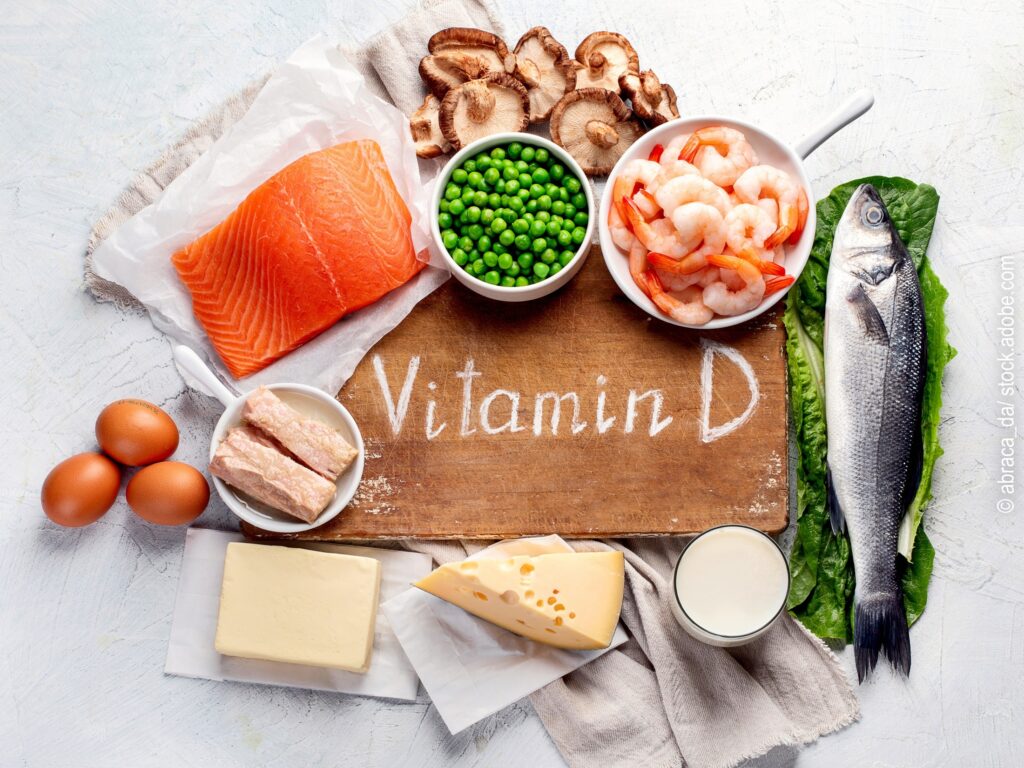
Practical tip: Fish Day
A simple eating routine for everyday work:
- Once or twice a week, fatty sea fish such as salmon, herring or mackerel are included in the diet. 1.
- Choose a fixed weekday for this, for example for the shared lunch or in the canteen.
- In addition, eggs and some edible mushrooms are suitable, although they contain significantly lower amounts of vitamin D. 1.
Important to know: Nutrition alone only covers a small part of the vitamin D requirement. 1. The Fish Day is a good starting point, but it does not replace outdoor activities or the need for medical evaluation. If there are any intolerances or special dietary requirements, the routine can be adjusted accordingly.
Conclusion
Vitamin D status fluctuates with the seasons, and in the winter months it tends to be lower in many people. Measuring it provides clarity instead of speculation. Whether additional measures are necessary is determined by the measurement value in conjunction with a doctor, not by a potluck approach. For companies, vitamin D screening is a low-threshold entry point into prevention that can be well integrated with nutrition and exercise programs.
Would you like to get your team ready for autumn and winter now? Contact us – Together, we'll find the right workplace health management measures for your company.
1 Federal Institute for Risk Assessment, German Society for Nutrition & Max Rubner Institute. (2012). Selected questions and answers on vitamin D. Common FAQ from October 22, 2012. Accessed from https://www.dge.de/fileadmin/dok/gesunde-ernaehrung/faq/DGE-BfR-MRI-FAQ-Vitamin_D_de-2012.pdf
2 Rabenberg, M., Scheidt-Nave, C., Busch, M. A., Rieckmann, N., Hintzpeter, B., & Mensink, G. B. M. (2015). Vitamin D status among adults in Germany – results from the German Health Interview and Examination Survey for Adults (DEGS1). BMC Public Health, 15, Article 641. https://doi.org/10.1186/s12889-015-2016-7
3 European Commission. (2012). Commission Regulation (EU) No 432/2012 of 16 May 2012 establishing a list of permitted additional health claims made on foods other than those referring to the reduction of disease risk and the development and health benefits of children. Official Journal of the European Union, L 136.
4 Stiftung Warentest. (year). FAQ Vitamin D: Determine the vitamin level. Retrieved from https://www.test.de/FAQ-Vitamin-D-4677625-4723830/