
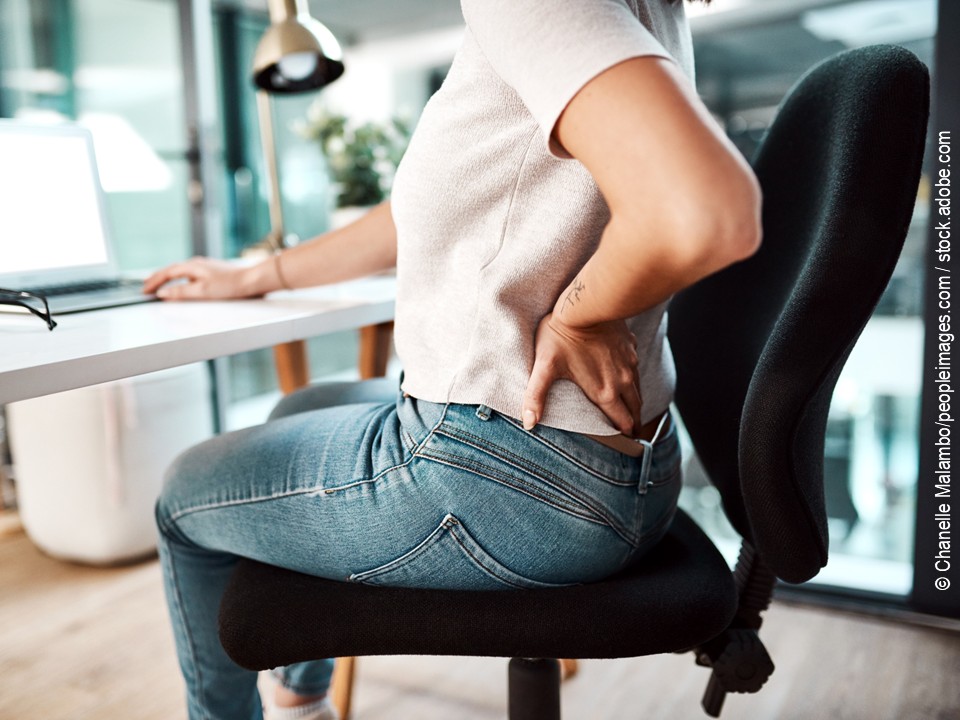
Stop burning money on ergonomic chairs: why back pain reaches record highs despite millions in investment
„We have become a sedentary society that has forgotten how to move in a species-appropriate way. Ergonomics alone does not heal a back; it is the quality of movement and awareness of one's own physical limitations that make the difference between pain and performance.“
Prof. Dr. med. Ingo Froböse, University Professor at the German Sport University Cologne and expert in prevention and rehabilitation.
When the back weighs on the balance sheet
Musculoskeletal disorders (MSDs) continue to be responsible for one in four sick days in Germany, according to the current health report from Techniker Krankenkasse (TK)¹. A single herniated disc costs a company an average of between 10,000 and 15,000 euros, taking into account continued pay, replacement procurement, and project delays. Those who only react here, instead of screening proactively, manage absences instead of preventing them.
The Ergonomics Paradox
Scientific research shows that chronic lack of movement in the office raises blood pressure and blood sugar levels to a point that gradually damages blood vessel walls. This applies specifically to the spine: static strain is poison. Even the best chair cannot prevent the atrophy of the stabilizing deep muscles if dynamic stimuli are not applied. Studies from Harvard Medical School prove that purely passive ergonomics without active posture correction barely reduces the risk of chronic pain conditions.
Why Your Previous Back School Was Probably a Failure
Stop spending money on back training courses that ignore actual needs due to a „one-size-fits-all“ approach. If you send all employees to the same course without knowing who has muscular imbalances, who has vertebral blockages, and who has poor workstation ergonomics, you are wasting resources. Effective prevention requires individualization, not standardization.
Objective Data Instead of Vague Speculation: The Diagnostics Revolution
To ensure long-term back health, we need to open the „body“ black box. Only when we know where the weaknesses lie can we intervene in a targeted manner. We pick up where standard solutions leave off:
- Accurate Spine Analysis: With the Medi Mouse® Let's visualize the spine's shape and mobility without radiation. This way, postural damage becomes visible before it becomes chronic.
- Mobility Check: The Mobee® fit shows us exactly which muscle groups are shortened – often the true cause of radiating pain in the lumbar region.
- Trunk muscle strength measurement With EasyTorque® Let's identify muscular imbalances. A strong back needs a stable foundation; we measure whether this is present.
- The Human-Machine Interface A professional Workplace analysis ensures that the expensive hardware is also correctly adjusted to individual body measurements.
Your development impulse: Change is a process
Back pain is often accepted as an inevitable side effect of office life. But our bodies are not rigid objects that are „repaired“ by an expensive chair – they are highly dynamic systems. If you feel a twinge in your back, it's not a sign of defect, but your body's call for varied movement. The good news is that even with long-standing poor posture, the spine is surprisingly adaptable. Through targeted mobilization and by activating the deep musculature, you can transform your „sitting posture“ into an „active posture“ step by step. Be patient with your body – every small movement is a victory over static posture.
Your practice moment: Use the „Minute Check“ for your workspace. Stand up once an hour for 60 seconds, clasp your hands behind your head, and pull your elbows wide apart. Breathe deeply as you do this, gently lifting your sternum. This brief straightening opens the chest, relieves pressure on the lumbar spine, and signals your circulation: „We're moving.“ A small act of self-care that makes the biggest difference in the long run.
Conclusion: Invest in results, not in hopes
Back health is not a random product, but the result of a data-driven strategy. It's a shame that many companies only take action when the first herniated disc disrupts project planning. Take control. Stop investing on a wing and a prayer, and start making your team's health measurable.
Would you like to uncover the blind spots in your workforce?
Contact us for a no-obligation initial consultation. Let's find out together how we can sustainably reduce your absenteeism with objective screenings.
Techniker Krankenkasse. (2024). Health Report 2024: Incapacitation for Work. Hamburg: TK. Harvard Business Review. (2023). What's the hard return on employee wellness programs?. HBR Press. World Health Organization. (2021). Musculoskeletal conditions and workplace health. Geneva: WHO.